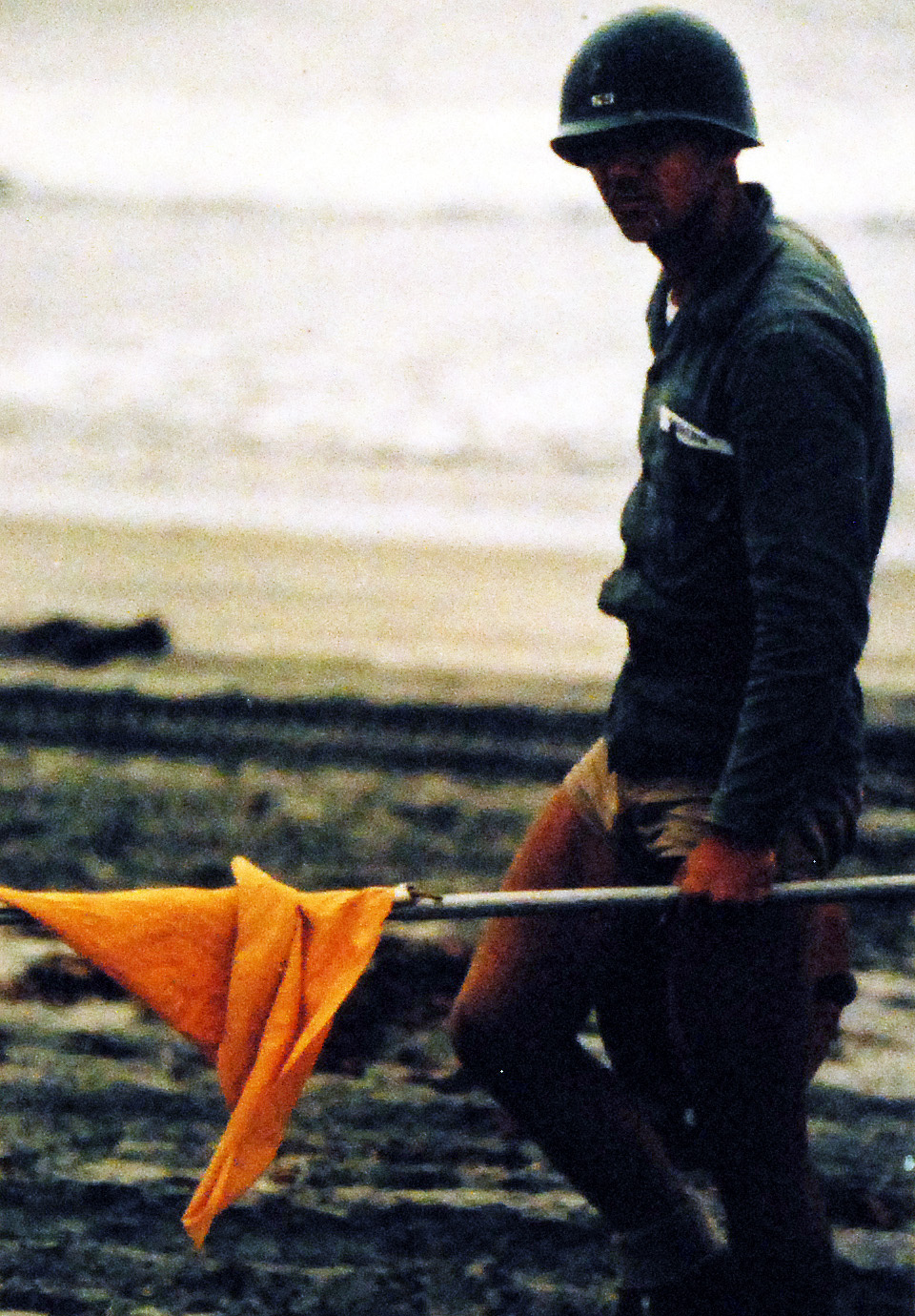
Fort Pierce, Florida, is known to residents and visitors as the Sunrise City, a quiet coastal community on the Treasure Coast celebrated for its fishing, its history, and its warm Atlantic beaches. But during the darkest years of World War II, those same beaches served a very different purpose. Between 1943 and 1945, the United States Navy transformed the shores of North and South Hutchinson Island, just off the coast of Fort Pierce, into an amphibious training base.
Here the Naval Combat Demolition Units and the Underwater Demolition Teams were created and trained. These men (the UDT frogmen) would clear the beaches at Normandy on D-Day, demolish Japanese fortifications across the Pacific, and establish the direct lineage that leads to today's United States Navy SEALs. Fort Pierce is the birthplace of the Navy SEALs, and this is the story of how a small Florida city earned that name.
The need for combat swimmers: lessons from Tarawa
By early 1943, the United States military had learned hard lessons about the challenges of amphibious warfare. The Allied landings in North Africa in November 1942 had been hampered by uncharted reefs, underwater obstacles, and the difficulty of navigating landing craft onto unfamiliar beaches under fire. But it was the Battle of Tarawa in the Gilbert Islands on November 20, 1943, that most vividly demonstrated the need for specialized beach reconnaissance and obstacle clearance.
At Tarawa, American landing craft became stranded on an uncharted reef hundreds of yards from the beach, forcing Marines to wade through chest-deep water under withering Japanese fire. The result was catastrophic: over 1,000 Marines were killed and more than 2,000 wounded in just 76 hours of fighting. Military planners recognized that future amphibious operations required dedicated teams capable of scouting beaches, mapping underwater obstacles, and demolishing barriers before the main landing force arrived.
Even before Tarawa, however, the Navy had begun to experiment with combat demolition. In May 1943, Lieutenant Commander Draper Kauffman was tasked with establishing a training program for naval combat demolition at Fort Pierce, Florida. Kauffman was an unusual choice for a naval officer: he had been rejected by the Navy for poor eyesight before the war, volunteered as an ambulance driver in France in 1940, was taken prisoner by the Germans, and afterwards served with the British Royal Navy's bomb disposal unit during the London Blitz before the U.S. Navy finally accepted him. His experience with explosives and his iron determination made him the ideal person to build a new kind of warrior.
UDT and Navy SEALs: a lineage
The Underwater Demolition Teams (UDTs) were specialized U.S. Navy units trained in reconnaissance, beach obstacle clearance, and underwater demolition during World War II. The UDTs evolved from the Naval Combat Demolition Units (NCDUs) established at Fort Pierce in 1943. In 1962, President John F. Kennedy commissioned the first Navy SEAL (Sea, Air, and Land) teams, which were drawn directly from the UDTs. The UDTs were officially absorbed into the SEAL teams in 1983. Today's Navy SEALs trace their heritage and traditions directly to the UDT frogmen who trained on the beaches of Fort Pierce.
Fort Pierce: the ideal training ground
The Navy selected Fort Pierce as the site for its Amphibious Training Base for several practical reasons. The beaches of Hutchinson Island, the barrier island that shields Fort Pierce from the open Atlantic, offered a long stretch of relatively undeveloped coastline with conditions that resembled the beaches the military expected to encounter in both the European and Pacific theaters.
The warm Florida waters allowed year-round training, and the area's relative isolation (Fort Pierce in 1943 was a small agricultural and fishing town with a population of only a few thousand) provided the security necessary for a classified military operation. The Indian River Lagoon, running between the mainland and the barrier island, offered calm waters for initial swimming and diving exercises before trainees graduated to the open ocean.
The Amphibious Training Base was formally established in early 1943, and its footprint quickly expanded across Hutchinson Island and parts of the Fort Pierce mainland. The base eventually encompassed miles of beachfront, with training areas, barracks, obstacle courses, and demolition ranges spread across North and South Hutchinson Island. At its peak, the base employed thousands of support personnel and processed a continuous stream of trainees. The presence of the military transformed Fort Pierce's wartime economy, bringing an influx of servicemen and associated commerce to a community still recovering from the economic hardships of the Great Depression and the lingering effects of the 1928 Okeechobee Hurricane.
Commander Draper Kauffman and the birth of the NCDUs
Lieutenant Commander Draper Kauffman arrived at Fort Pierce in the spring of 1943 with orders to create a training program for Naval Combat Demolition Units. The NCDUs were small teams (typically one officer and five enlisted men) trained to destroy obstacles on enemy-held beaches ahead of amphibious landings. Kauffman designed a hard training regimen, drawing on his own experiences in combat and bomb disposal. The program emphasized physical endurance, mental toughness, teamwork, and expertise with explosives.
The centerpiece of Kauffman's training program was a grueling week of continuous physical and mental stress that would become known as "Hell Week." During Hell Week, trainees endured near-continuous physical exercise, sleep deprivation, cold water immersion, and psychological pressure designed to push each man past what he believed were his limits. The purpose was to identify the men who possessed the mental fortitude and physical resilience to perform under the extreme conditions of combat. Dropout rates during Hell Week were extraordinarily high, often exceeding 50 percent or more of each class. Those who survived earned the right to continue training and, ultimately, to serve in combat.
Hell Week, born on the beaches of Fort Pierce in 1943, remains a defining element of Navy SEAL training today. The modern Basic Underwater Demolition/SEAL (BUD/S) training program, conducted at the Naval Special Warfare Center in Coronado, California, preserves Hell Week as a direct continuation of the tradition established by Kauffman and his first classes of trainees at Fort Pierce.
From NCDUs to UDTs: evolution at Fort Pierce
As the war progressed and the scope of amphibious operations expanded, the Naval Combat Demolition Units evolved into the larger Underwater Demolition Teams. While the NCDUs were small, specialized demolition squads designed to blow up beach obstacles, the UDTs were organized into larger platoon-sized units with broader capabilities that included hydrographic reconnaissance, the systematic surveying and mapping of offshore approaches, water depths, reef structures, and beach gradients. UDT swimmers, wearing nothing but swim trunks, face masks, and fins, would swim from submarines or small boats to within yards of enemy-held shorelines, take measurements, map obstacles, and return with detailed intelligence that was critical for planning landing operations.
The training at Fort Pierce grew more sophisticated as the UDT concept matured. Trainees learned to handle a wide range of demolition materials, from standard TNT charges to the specialized shaped charges used to cut through steel and concrete obstacles. They practiced underwater swimming techniques, learned to navigate by compass in open water, and conducted nighttime reconnaissance exercises in the Indian River Lagoon and the Atlantic surf. The obstacle courses on Hutchinson Island were designed to simulate the conditions the men would face on hostile beaches, including barbed wire, log barriers, steel hedgehogs, and concrete tetrahedrons modeled on German and Japanese beach defenses.
Over the course of the war, more than 3,500 officers and enlisted men trained at the Fort Pierce Amphibious Training Base. They came from all branches of the Navy and from the Army as well, and they represented a cross-section of wartime America. Many were volunteers drawn by the challenge and the sense of purpose; others were assigned to the program based on their physical fitness or specialized skills. Regardless of how they arrived, those who completed the program at Fort Pierce left ready for the beaches they were about to be sent to.
D-Day: Fort Pierce men on the beaches of Normandy
The first major combat test of the Naval Combat Demolition Units came on June 6, 1944 (D-Day) when Allied forces launched the largest amphibious invasion in history on the beaches of Normandy, France. The NCDUs trained at Fort Pierce were assigned a critical mission: to clear lanes through the extensive German beach obstacles on Omaha and Utah Beaches ahead of the main landing force. The obstacles included steel hedgehogs, concrete tetrahedrons, wooden stakes tipped with mines, and "Belgian gates", massive steel frames designed to rip open the hulls of landing craft.
The NCDU men went ashore in the first wave of the invasion, wading through the surf under intense German machine gun, mortar, and artillery fire to reach the obstacles and attach demolition charges. The conditions were far worse than anything they had encountered in training. The tides were running faster than expected, many of the demolition charges were lost when boats sank or overturned, and the beach was swept by devastating fire from German fortifications on the bluffs above. Despite these conditions, the NCDU men cleared critical gaps in the obstacle belt, allowing landing craft to reach the beach and disembark the infantry that would establish the beachhead.
The cost was terrible. On Omaha Beach alone, NCDU casualties exceeded 50 percent. Many of the men killed and wounded on June 6 had trained together on the beaches of Fort Pierce just months earlier. Their sacrifice was essential to the success of the Normandy invasion and, ultimately, to the liberation of Western Europe. The Fort Pierce-trained demolition men who survived D-Day went on to participate in subsequent amphibious operations in Southern France and elsewhere in the European theater.
The Pacific Theater: UDTs in island warfare
While the NCDUs were proving their worth at Normandy, the Underwater Demolition Teams were being deployed extensively across the Pacific Theater. The nature of the war in the Pacific (a long series of amphibious assaults on heavily fortified island strongholds) made the UDTs indispensable. Before each major landing, UDT swimmers would be dispatched to reconnoiter the target beaches, chart underwater approaches, and destroy obstacles and fortifications.
UDT frogmen participated in virtually every major amphibious operation in the Pacific from 1944 onward, including the invasions of the Marshall Islands, the Mariana Islands (Saipan, Guam, and Tinian), Peleliu, the Philippines (Leyte and Lingayen Gulf), Iwo Jima, and Okinawa. At Iwo Jima in February 1945, UDT swimmers conducted reconnaissance under fire just days before the Marines landed on the volcanic island's black sand beaches. At Okinawa in April 1945, UDT teams cleared vast fields of underwater obstacles and provided critical intelligence for the last great amphibious operation of the war.
The UDT frogmen developed a distinctive culture and esprit de corps during their Pacific service. They operated with minimal equipment (swim trunks, fins, face masks, knives, and demolition charges) and they took pride in their ability to accomplish missions that no other military unit could perform. Their unofficial motto, "Naked Warriors," reflected both their sparse equipment and their willingness to face the enemy with nothing but their skill, their courage, and their training. That training, in every case, traced back to the beaches of Fort Pierce.
After the war: decommissioning and memory
The Fort Pierce Amphibious Training Base was decommissioned after the end of World War II in 1945. The military facilities on Hutchinson Island were dismantled or repurposed, and the beaches gradually returned to civilian use. Fort Pierce itself transitioned back to a peacetime economy, though the wartime influx of military personnel and spending had altered the community in lasting ways. Some servicemen who had trained at Fort Pierce returned after the war to settle permanently in the area, drawn by the climate, the fishing, and perhaps by their memories of the place where they had been tested and transformed.
The memory of the UDT training program faded somewhat from public awareness in the decades after the war, even as the military units it had created continued to evolve. In 1962, President John F. Kennedy authorized the creation of the first Navy SEAL teams, which were drawn directly from the existing Underwater Demolition Teams. The SEALs (trained for Sea, Air, and Land operations) represented an expansion of the UDT mission into unconventional warfare, counterterrorism, and special reconnaissance. The UDTs were formally merged into the SEAL teams in 1983, but the heritage, traditions, and training philosophy established at Fort Pierce remained at the core of the SEAL identity.
Fort Pierce's wartime legacy also intersects with the broader history of the community. Local figures such as Dan McCarty, who served in the military during WWII and later became Governor of Florida, exemplify the connection between Fort Pierce's wartime experience and its postwar civic life. The war years brought changes to the city's economy, demographics, and self-image that would shape its development for decades. For more on Fort Pierce's historic places and landmarks, including the sites associated with the training base, explore our Places section.
The National Navy UDT-SEAL Museum
Today, the most visible tribute to the UDT legacy in Fort Pierce is the National Navy UDT-SEAL Museum, located at 3300 North Highway A1A on North Hutchinson Island, on the very beaches where the original training took place. The museum was established in 1985 and is the only museum in the world dedicated to preserving the history of the Navy SEALs and their UDT predecessors. Its collection includes artifacts from World War II, the Korean War, the Vietnam War, and modern SEAL operations, as well as personal items, photographs, and documents donated by veterans and their families.
The museum's outdoor exhibits include actual military vehicles, a patrol boat, and a recreation of some of the training obstacles that UDT trainees would have encountered during World War II. Each year, the museum hosts the Muster, a gathering of active-duty and retired SEALs, UDT veterans, and supporters that has become one of Fort Pierce's signature community events. The museum serves not only as a memorial to the men who trained and fought but also as an educational resource that connects Fort Pierce's military heritage to the broader story of American special operations forces.
The training program established on these beaches by Draper Kauffman in 1943 created a military tradition that has endured for more than eight decades. The Hell Week that began on the sands of Hutchinson Island continues, in modified form, to this day. The values of physical toughness, mental resilience, teamwork under pressure, and the willingness to go where others cannot that were forged at Fort Pierce remain the defining characteristics of the Navy SEALs. For the city of Fort Pierce, this legacy is a source of deep and enduring pride, a chapter of history that connects a small Florida coastal community to the amphibious operations of the Second World War.
To learn about another defining event in Fort Pierce's history, read about the 1928 Okeechobee Hurricane, which came ashore fifty miles south of the town fifteen years before the Navy arrived. For more on the broader history of St. Lucie County during the war years and beyond, visit our sister publication.