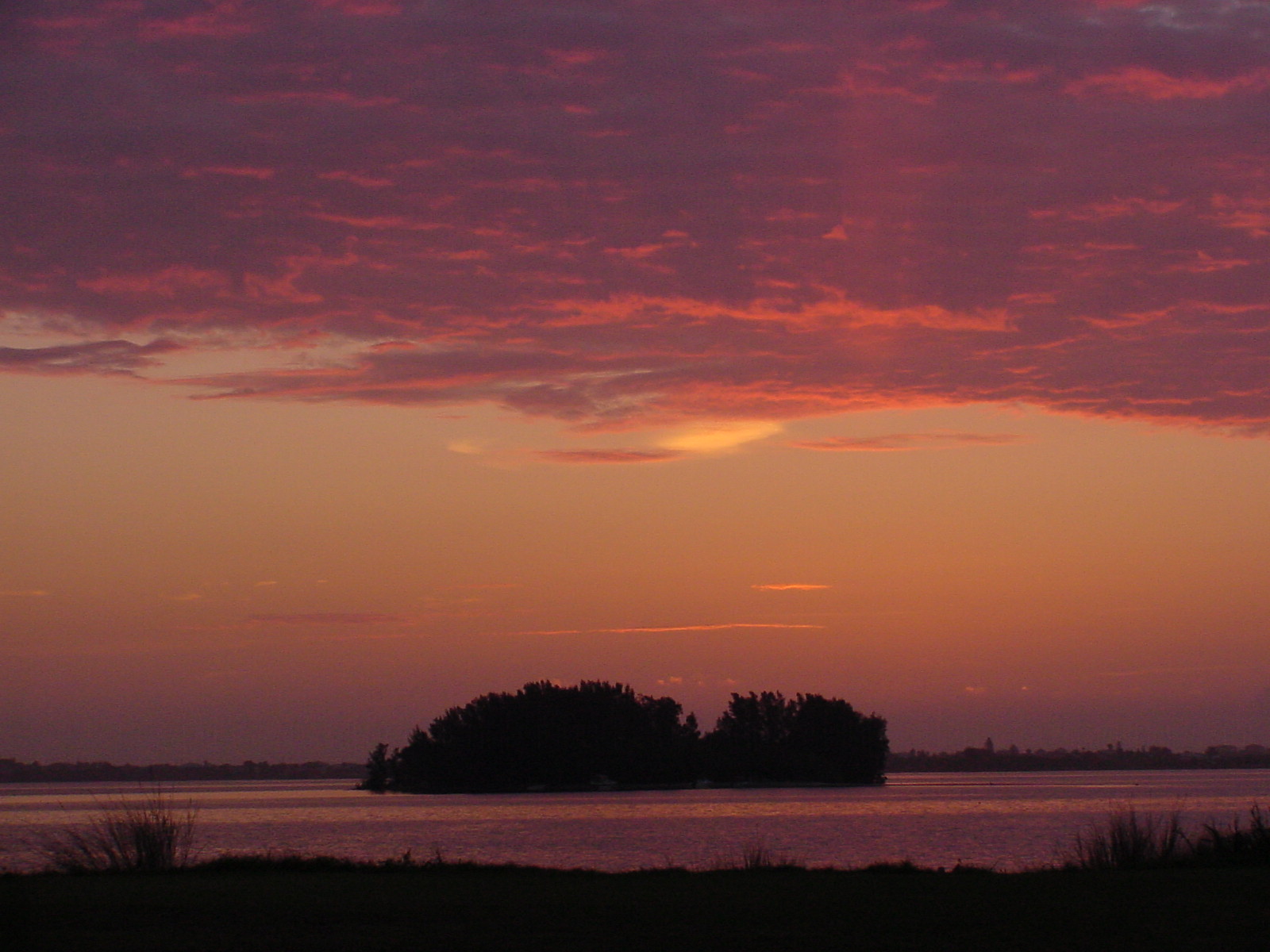
The water at the foot of Fort Pierce’s downtown streets is the Indian River Lagoon, a shallow estuary that runs 156 miles behind the barrier islands of Florida’s Atlantic coast. The town sits near its middle, on the western shore, with Hutchinson Island between it and the ocean. This page keeps to the town’s shore: the fort that was planted on it, the years when the river was the only road, the docks and fish houses that were the town’s business, and the storms that came up the water.
The lagoon as a living system, from its species to its seagrass and the work to restore it, is the subject of the Indian River Lagoon guide at Treasure Coast Ecosystems. The county’s longer history on the water, from the Ais to the fight over the St. Lucie Inlet, belongs to The St. Lucie Record.
The shore where the fort stood
Fort Pierce exists where it does because of the water. In January 1838, during the Second Seminole War, the Army put a small fortification on the lagoon’s western shore as a supply depot and staging point, one of a chain of posts along the Florida frontier, and named it for Lieutenant Colonel Benjamin Kendrick Pierce. The waterway gave the post its supply line and a defensible front. The approximate site is Old Fort Park, along the river downtown, where a historical marker stands today. How the settlement grew from that shore is told in the story of historic downtown Fort Pierce.
When the war ended the fort was abandoned, and for decades the shore where it had stood was visited mainly by fishermen, hunters and the occasional homesteader drawn by the soil and the fish.
The river was the road
Before the railroad, everything came and went by water. The families who staked claims along the river after the Civil War got their mail, their supplies and their news by boat, and the river was their highway.
The pineapples that made the region’s first agricultural money went north the same way, by boat along the lagoon, until the Florida East Coast Railway reached the town in 1894 and the fruit moved to the rails. The town’s end of that story is on The Fort Pierce pineapple years. The citrus that followed shipped from packing houses by the tracks, but it was still the lagoon’s warmth on cold nights that kept the frost off the groves.
Docks and fish houses
By 1905 the town’s business at the water was fish and boats, and the town treated it that way. That September the city council set the yearly license for fish houses and fish dealers lower than the year before, on the reasoning that the value of the fishing interests to the community, and the thin margin in the trade, warranted the lower rate.
The same month the county went to court to stop a fish house going up on one of the town’s docks, on the complaint of people who used the dock, by the Tribune’s account, only to promenade or to hitch a launch. The judge refused the injunction. The paper’s own view was that a fish house was a lawful business and that the county had better uses for its money than another lawsuit.
The docks grew with the trade. The Cobb dock, already six hundred feet long, was extended in the summer of 1909 to make it, by the News’s reckoning, the longest dock on the Indian River, with new fish houses on the extension. The Cobb and Sample docks were the largest on the shore; more than sixty launches and boats could be counted near them on a rest day, and the Cobb dock was the whole town’s promenade on Sunday afternoons.
By 1910 five wholesale fish houses stood on the town dock a few feet apart, beside a machine shop and a gasoline warehouse, and on an August night that year one of them burned. The fire, and the fire department it produced, have their own page. The Fort Pierce Hotel stood on the bank of the river above it all.
The city dock was the town’s front step. A houseboat lay at it for several weeks in the winter of 1910, a church party left from it by launch one May evening in 1911, and that December a dealer was selling fresh oysters on it.
The trade ran on a calendar: the port shipped its fish by the barrel, the closed season for mullet ran by law from the middle of November into the new year, and the town’s own description of itself in 1909 put the fishery among its first claims. The whole arc of that trade, from the mullet camps to the shrimp fleet and the net ban of 1994, is on the fishing industry page.
The inlet, three miles off
The town’s ocean door in those years was the natural Indian River Inlet, about three miles away, which the town’s 1909 description of itself called the great fishing point. Inlets on this coast open and close. The permanent Fort Pierce Inlet was cut in 1921 and held open with jetties, and it gave the town’s boats a reliable way to the Atlantic for the first time. The other inlet, the St. Lucie, was a county fight rather than a town one, and the campaign to make it a harbor is told on The St. Lucie Record.
What the storms did to the waterfront
A hurricane on the Indian River is a waterfront event before it is anything else, because the town kept its money on the water: wharfs running out from the shore with the fish houses on them, boats alongside, nets on racks to dry, boathouses on the bank.
The hurricane of 1910 demolished the wharfs and boathouses of E. C. Summerlin and F. M. Tyler, tore holes in the wharfs of P. P. Cobb and the Indian River and Lake Worth Fish Company, and wrecked the contractors’ buildings and the bottling works on the shore. A week later the Board of Trade asked the Weather Bureau for a flagstaff so the town could see a storm warning, and its petition counted about fifty thousand dollars of boats, nets, racks and buildings in exposed places. The town’s next great storm, in September 1928, was of another order and has its own page.
The waterfront since
Through the middle of the twentieth century the fish houses stood on pilings over the water along the Indian River shore, sorting, icing and packing the catch for the trucks and the trains, and the shrimp fleet that arrived in the 1940s and 1950s made the harbor its home port. The net ban of 1994 ended most of the net fishing that had sustained the waterfront for a century, and the fish houses closed one by one.
Where they stood, the city marina, restaurants and public spaces now line Indian River Drive, and the farmers’ market fills the waterfront on Saturday mornings. Working boats still tie up at the docks, charter boats still run out through the inlet, and the town still faces the water it was founded on. For Fort Pierce the health of that water is the waterfront’s economy. What has gone wrong with it, and what is being done about it, is told in the water quality pages at Treasure Coast Ecosystems.
The Indian River Lagoon beyond Fort Pierce
The lagoon is 156 miles long, runs in three connected segments, and holds more than 4,300 recorded species. Those facts and everything behind them, the seagrass, the blooms, the manatees and the restoration work, are the subject of the Indian River Lagoon guide at Treasure Coast Ecosystems. The Ais people who fished these waters for thousands of years, the county’s campaign for the St. Lucie Inlet, and the Indian River name that became a citrus brand are told from the county’s side on The St. Lucie Record. We keep to the town’s shore.
Sources
The 1905 license and the fish-house suit are in The St. Lucie County Tribune of September 29, 1905 (the council’s license schedule) and its editorial page; the city dock is in the Tribune of December 23, 1910 and the Fort Pierce News of May 12, 1911 and December 8, 1911, all digitized by the Library of Congress in Chronicling America and in the public domain. The docks of 1909, the fishery’s calendar and the hurricane of 1910 are cited on the pages this one links to.
Frequently asked questions
Is the Indian River at Fort Pierce actually a river?
No. It is a lagoon, a long, shallow estuary behind the barrier islands, connected to the ocean through inlets rather than flowing to it. What that means for the water and for what lives in it is explained at Treasure Coast Ecosystems.
Where was the original fort?
On the lagoon’s western shore, at the approximate site of Old Fort Park along the river in downtown Fort Pierce. The Army established it in January 1838 during the Second Seminole War and abandoned it when the war ended.
When did the Fort Pierce Inlet open?
The permanent inlet was cut in 1921 and stabilized with jetties. Before that the town’s way to the ocean was the natural Indian River Inlet about three miles away, and the temporary inlets that came and went along this coast.
What did the hurricane of 1910 do to the waterfront?
The wind of October 17 and 18, 1910 demolished the wharfs and boathouses of E. C. Summerlin and F. M. Tyler, tore holes in the wharfs of P. P. Cobb and the Indian River and Lake Worth Fish Company, and wrecked the contractors’ buildings and the bottling works on the shore. The Board of Trade’s petition for a Weather Bureau flagstaff a month later counted about fifty thousand dollars of fishing gear in exposed places.