One of the plainest records of Fort Pierce in 1910 is the list the town printed about itself. From April 1909 the Fort Pierce News ran a standing box headed FORT PIERCE HAS, one line for each thing the town was proud of, and beside it a second box, FORT PIERCE IS. This page reads both as the town’s portrait of itself, sets them beside a second count of the same town made the same year, and follows the list as it changed into 1911.
What the box listed in 1909
In 1909 the list ran to nearly fifty lines. Here they are grouped by kind.
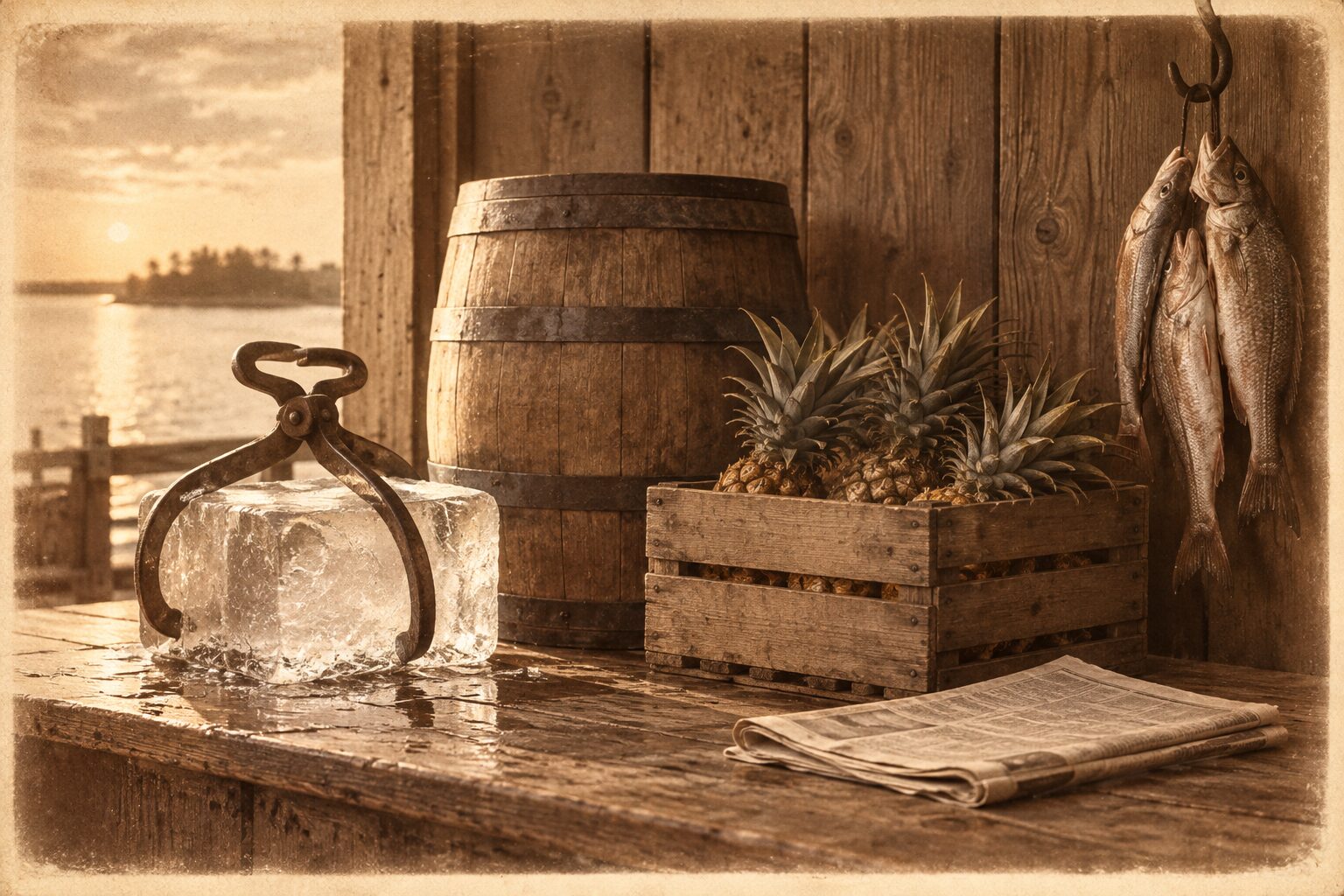
- Trades and works: an ice factory, a barrel factory, a lumber yard, concrete works, a wagon factory, a cabinet maker, a blacksmith shop, two machine shops, six fish houses and six building contractors.
- Shops and services: seventeen stores “including all lines,” a bakery, six hotels, numerous boarding houses, a strong bank, two livery stables, three real estate agencies, a wholesale cattle company, an undertaking establishment, a picture framing establishment, a photographic studio and two telephone systems.
- Professions: six lawyers, four physicians and two dentists.
- Town life: a library, a good band, two orchestras, an opera house, a skating rink, a moving picture theatre, three churches, a junior high school and two good newspapers.
- Lodges and clubs: a Masonic lodge, a Royal Arch chapter, an Eastern Star chapter, an Odd Fellows lodge, a Woodmen of the World lodge, a Board of Trade, a Boosters Club and a Ladies Improvement Club.
- Streets and water: paved streets, cement sidewalks, a volunteer fire department and “excellent soft water in abundance.”
- And the people: “progressive citizens” and “two thousand inhabitants.”
What the town said it was
The second box, FORT PIERCE IS, gave the town’s place in the world. By its own account Fort Pierce was the sportsman’s paradise, on the famous Indian River 242 miles south of Jacksonville and a mile and a half from the Atlantic Ocean, a rendezvous for pleasure craft, in the heart of the Pineapple Belt and backed up by good farming lands.
It was the county seat of St. Lucie County, the commercial center of the middle East Coast, division headquarters of the Florida East Coast Railway, and headquarters for fruit and produce buyers in season. It was growing, the box said, faster than any other town on the East Coast. And it was “preparing to light by electricity.”
What changed by 1911
The junior high school of 1909 was a senior high school in the box by January 1910. The bigger change came early in 1911, when the box was rewritten. The skating rink was last listed in December 1910, and the Boosters Club, the two orchestras and the line about preparing to light by electricity in January 1911. Electric lights were still a question for the bond election of 1911.
In their place, from February and March 1911, came two strong banks, a choral club, automobile garages, railroad shops, a city telegraph office and a new line, “Finest court house on East Coast,” meaning the courthouse of 1909. By July the box listed a Moose lodge. From February the box also carried two words: “No saloons.”
Other lines grew. Three churches became five, six lawyers seven, and the bakery, the bank, the opera house and the blacksmith shop each became two. New lines counted two dairies, two laundries, two restaurants, two drug stores, two meat markets, three barber shops, a boot and shoemaker, a wholesale feed store, a boat building establishment and two clothes pressing establishments.
One line never moved. From the first printing in April 1909 to October 1911, through all the new banks, churches and garages, the box gave the town two thousand inhabitants.
A second count of the same town
Near the end of 1909 The St. Lucie County Tribune reprinted an article on the advantages of Fort Pierce and St. Lucie County from the Florida East Coast Homeseeker. It counted the same town in the same year and came out differently in places: five lawyers to the box’s six, three doctors to its four physicians, four real estate dealers to its three agencies, and eight wholesale fish companies to its six fish houses. It named five church societies, Methodist, Baptist, Episcopal, Catholic and Presbyterian, while the box still said three churches.
It also listed things the 1909 box did not: four grocers, three dry goods stores, two men’s furnishing stores, two plumbing and iron working shops, two drug stores, two boat building shops, three markets, an artificial stone plant, three barber shops, a jewelry store, four architects, two hardware stores and two laundries. Two of the three doctors had other business on the side, which the article called no unusual thing for Florida. And it put a number on the railway shops: a payroll estimated at ten to fifteen thousand dollars a month.
Reading the two lists
Neither list is a census of Fort Pierce in 1910. They agree on an ice factory, a barrel factory, a bakery, two dentists, two livery stables, six builders and an undertaker. They also agree on one bank, though the News had been naming a second, the St. Lucie County Bank, from April 1908. For the streets those businesses stood on, see our history of historic downtown Fort Pierce.
Sources
This page is drawn from the two Fort Pierce weeklies of the day, digitized by the Library of Congress in Chronicling America and in the public domain. The box is read from the Fort Pierce News of April 30, 1909, October 1, 1909 and October 6, 1911, with each change dated by the printings in between. The Homeseeker article is in The St. Lucie County Tribune of December 24, 1909.